


How to Clean a Dog’s Butt Safely
Most dogs don’t need their bottom wiped after every poo. But soft stools, long fur or difficulty grooming can leave a mess that needs help.
Our approach to dog butt cleaning is simple: soften, wipe gently and dry. A dirty bottom needs cleaning; pain, swelling or discharge needs a different response.
Key Takeaways
- Use lukewarm water, a soft cloth or wipes made for dogs.
- Soften dried poo before wiping; never pull it from the fur.
- Leave tight mats to a groomer.
- Baths and wipes clean the outside. They cannot empty blocked anal glands.
- Stop if cleaning hurts or you find broken skin.
Common Reasons a Dog’s Bottom Gets Dirty
Soft stools and diarrhoea stick to fur more easily than formed poo. Long hair or mats can trap faeces, while age, reduced mobility or obesity can make grooming harder.
A dirty dog butt isn’t automatically an anal-gland problem. Look at what’s there: visible poo, tangled fur or an odour without obvious mess? The answer changes what to do next.
How to Clean a Dog’s Butt Safely
For a comfortable dog with intact skin, follow these four steps:
Soften. Gather disposable gloves, a soft cloth and a towel. Check that the water feels lukewarm, then hold the damp cloth against stuck-on poo until it loosens.
Wipe. Gently lift away the mess from the surrounding fur, working away from the anus. Use a clean part of the cloth for each pass. Don’t scrub, insert anything or squeeze the glands.
Rinse if needed. If you used dog shampoo, rinse it away thoroughly with clean, warm water. Follow the label for any wipe used.
Dry. Pat the area and surrounding fur dry with a soft towel. Wash your hands and clean the equipment afterwards.
These dog-bathing basics also help keep a small clean-up gentle.
Cleaning Fresh or Soft Poo
A small smear may need only a damp cloth or dog-safe wipe. Clean the fur and external skin gently, then check that no residue remains.
Scooch’s Anal Gland Wipes offer a convenient option between baths. Use them as directed for external hygiene; they aren’t a treatment for sore or infected glands.
Removing Dried Poo from Fur
Let water do the loosening. If a cloth isn’t enough, wet just the soiled fur and gently work away material as it softens.
Don’t tug or cut tightly matted fur with scissors. Dried faeces can form a mat that obstructs the anus. A groomer can handle uncomplicated mats; difficulty passing poo needs a vet.
What to Use and What to Avoid
Use
- Plain lukewarm water and a soft cloth
- Dog wipes labelled for the intended area
- A little mild dog shampoo when water isn’t enough; rinse thoroughly
- A soft towel for drying
Avoid
- Hot water, vigorous rubbing or repeated scrubbing
- Household cleaning wipes, alcohol-based products or strong fragrances
- Household products, even “mild soap”, as your default cleanser
- Pulling dried poo or cutting close mats with scissors
For sensitive skin, start with water. Guide Dogs recommends shampoo made specifically for dogs.
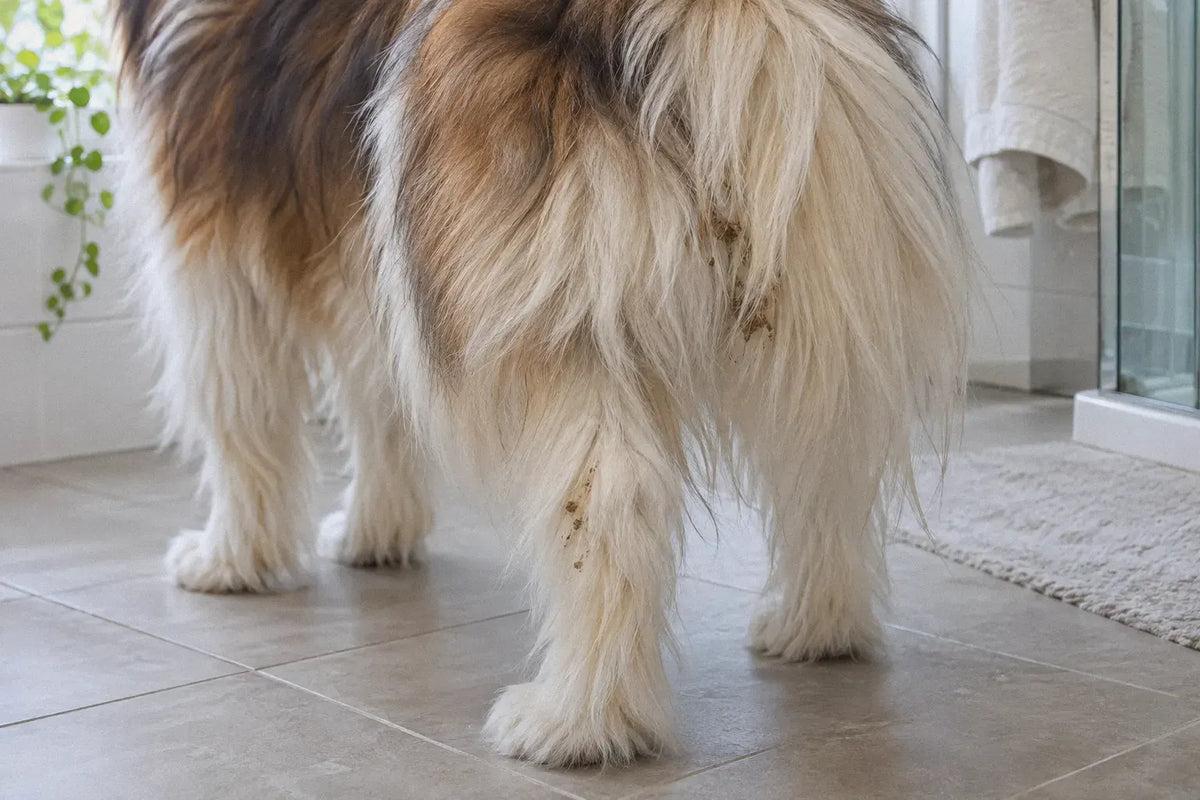
Let water do the loosening
Soften dried poo with lukewarm water before wiping. Avoid pulling at the fur.
Sitz Baths for Dogs
A sitz bath for dogs is a shallow warm-water soak around the bottom. It may help soften dirt without rubbing, rather than requiring a full-body wash.
Use a clean basin or bath with secure footing. Keep the water lukewarm and shallow, supervise throughout and stop if your dog becomes uncomfortable. Dry the area afterwards.
Salt water bathing and an Epsom salt bath aren’t routine cleaning steps. Use either only if your veterinarian recommends it and provides instructions. Don’t let your dog drink bath water.
A warm bath cannot clear a blocked gland or treat an abscess. For wounds or post-treatment care, follow the practice’s specific plan.
When a Dirty or Smelly Butt Needs Professional Help
If the mess keeps returning, more washing may miss the cause.
Signs It May Be an Anal Gland Problem
Repeated licking, scooting or a fishy smell can point to discomfort around the anal glands. Cleaning outside won’t resolve a blockage.
For dogs whose care plan includes extra fibre, Scooch’s Anal Gland chews provide nutritional support for stool quality and normal emptying. They don’t replace treatment; our guide explains what happens when glands stop draining.
When to Contact a Vet or Groomer
Choose a groomer for matted fur when the skin looks healthy and your dog is comfortable.
Stop home cleaning and contact your vet for pain, swelling, bleeding, discharge, an open wound, pus or a suspected abscess. Persistent odour or diarrhoea also needs assessment. If your dog cannot pass poo, seek urgent care.
PDSA advises getting help if material won’t come away easily or the area is painful or swollen.
Keep Cleaning Gentle
A cloth, lukewarm water and a towel are often enough. Clean what’s dirty, dry thoroughly and look for the reason if the same problem keeps returning.
Dog Butt Cleaning FAQs
Should I wipe my dog’s butt after every poo?
Usually, no. Clean visible mess when needed; repeated wiping of already-clean skin can cause irritation.
Can I use human wet wipes on my dog’s butt?
We’d choose water or dog-safe wipes instead. Human wipes vary in ingredients and aren’t automatically suitable for your dog’s skin.
Do puppies need their bottoms cleaned?
Sometimes, if poo sticks to the fur. Clean gently and keep them warm and dry; repeated diarrhoea in a puppy needs prompt veterinary advice.
Why is my dog’s bum red after cleaning?
Friction, product residue or an underlying skin problem may be responsible. Stop the product, rinse gently with water and seek advice if redness persists or the area hurts.
Why does my dog’s butt still smell after cleaning?
The source may be anal-gland secretions, trapped material or a skin problem. Persistent smell with licking, scooting or discharge needs an examination, rather than stronger fragrance.
