


Dog Anal Glands: Signs, Problems & Treatment
Most dogs empty their anal glands naturally when they poo. You don’t need to book routine squeezing for a comfortable dog with no history of problems. But repeated scooting, licking or a fishy smell can mean the sacs need attention.
We’d start with the cause of that change. Full glands, inflamed tissue and an abscess can produce similar symptoms, yet need different care. This guide explains the main problems, how a vet identifies them and what supports normal emptying.
Key Takeaways
- Anal sacs normally release their contents during bowel movements.
- Scooting and licking are signs of discomfort, not a diagnosis on their own.
- Blockage, inflammation, infection and an abscess are related but distinct problems.
- Painful swelling, pus, blood or an open wound need prompt veterinary attention.
- Suitable fibre and a healthy weight may support normal emptying; supplements cannot treat diseased glands.
What Anal Glands Are and What They Do
The structures commonly called anal glands are actually two small anal sacs. Glands in their lining produce a strong-smelling secretion thought to help dogs communicate through scent.
During pooing, pressure from a formed stool helps the anal glands release this material through small ducts. These scent glands may also empty suddenly when a dog is frightened or excited.
Where They Are on a Dog
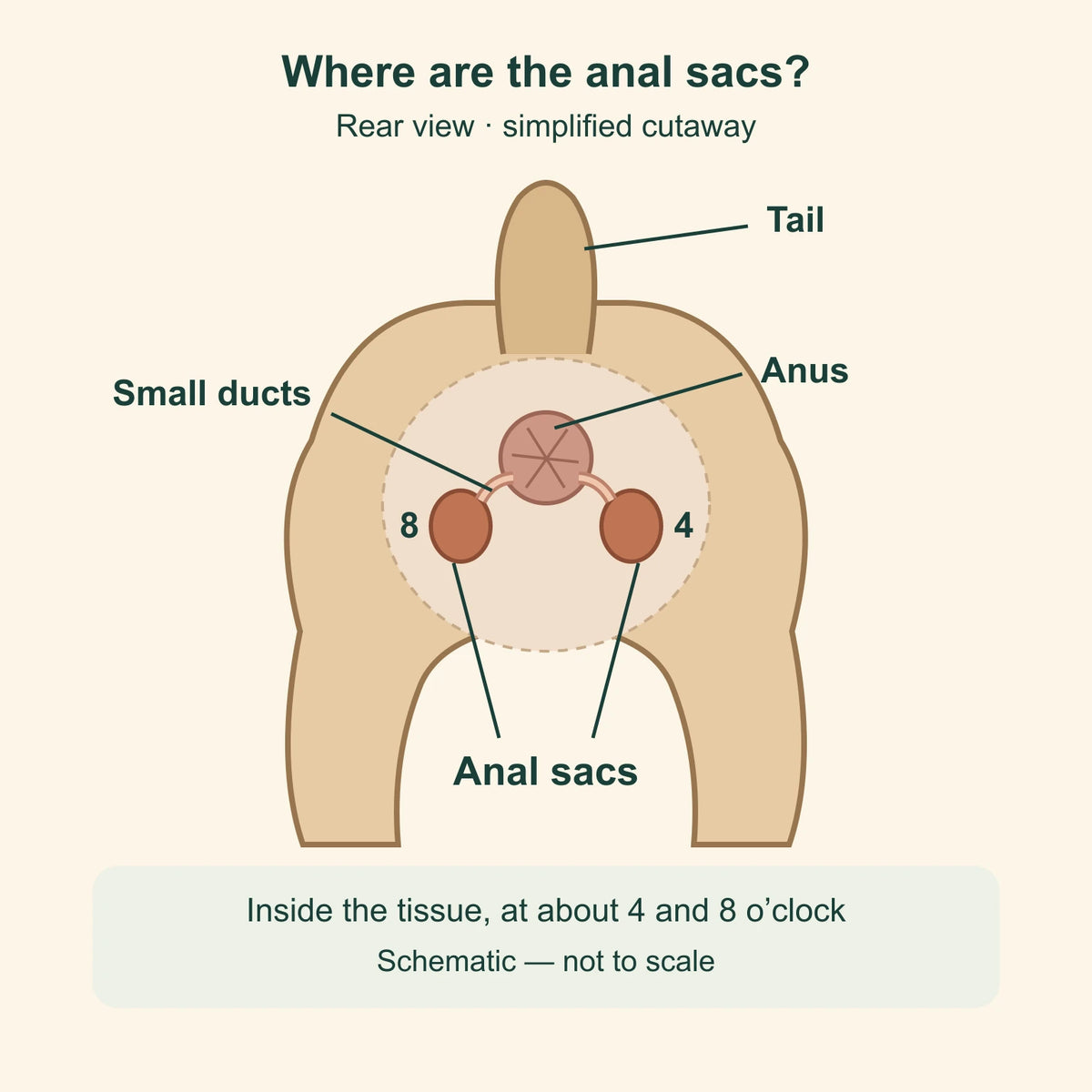
The anal glands sit beneath the skin on either side of the anus, roughly at the four and eight o’clock positions. Their size varies with the dog and how full they are.
Healthy anal glands are roughly pea to small-grape sized, depending on the dog. Vets4Pets describes their typical small-grape size. They sit just inside the bottom, so their condition is assessed by examination rather than appearance alone.
Types of Anal Gland Problems
Impaction and Blockage
Impaction is one of the most common anal gland problems, particularly in small dogs; allergies can also contribute. It means the contents are retained and difficult to empty. Material can become thick and pasty, while inflammation or narrow ducts can interfere with drainage.
Impacted anal glands create pressure and discomfort. The dog may scoot, lick or suddenly turn towards their rear end. Our separate guide explains what happens when anal glands aren’t emptied, without assuming every blockage progresses to an abscess.
Infection and Abscess
Inflammation of an anal sac is called anal sacculitis. Bacterial infection can occur, and an abscess is a pocket of pus associated with infection.
An affected area may become swollen, red and painful. An abscess needs more than expression or a change of food: the treatment depends on what the examination finds.
Ruptured Abscess
A ruptured abscess can leave an opening beside the anus that drains pus or blood. Releasing pressure doesn’t mean the infection has resolved.
Seek veterinary care rather than squeezing or probing it. We cover the next steps in our guide to ruptured anal gland abscesses.
Tumours and Anal Gland Cancer
An anal sac tumour is less common than a blockage. A persistent or firm lump is a reason to investigate, and some are first found during a routine rectal examination. Anal sac adenocarcinoma is a type of anal gland cancer for which the vet will discuss further tests and treatment.
Changes that may prompt testing include straining to poo, unusually thin or ribbon-like stools, or increased drinking and urination. Some anal sac tumours raise blood calcium, called hypercalcaemia, which can account for those thirst and urinary changes. These signs have other causes too; they are reasons for an examination, not proof of cancer.
A perianal gland adenoma is a benign growth from different glands in the surrounding skin, seen most often in older, unneutered male dogs. A sample may be needed to distinguish it from other lumps.
Anal Furunculosis and Other Nearby Problems
Anal furunculosis, also called perianal fistulas, causes painful sores and draining tracts around the anus. It is a separate inflammatory condition, rather than another name for a ruptured anal sac.
Structural differences, including narrow ducts or unusual sac position, can also contribute to recurring issues. Similar-looking symptoms don’t always have the same explanation.
Signs of Blocked or Full Anal Glands
An early clue can be a dog suddenly swinging round towards their bottom, as though something has stung or chased them. Some lick repeatedly or chew at reachable areas such as the tail base or back legs. These behaviours can also come from skin irritation, so they don’t identify anal glands as the cause on their own.
A streak of blood on the floor or on the poo, painful sitting, or visible swelling needs prompt attention. This checklist separates common warning signs from signs that need faster help.
Common warning signs — arrange a check
- Repeated scooting or licking around the bottom
- A recurring fishy smell or small stains
- Turning suddenly towards the rear end
Prompt attention — contact your vet today
- Painful swelling or marked discomfort
- Blood, pus or an open wound beside the anus
- Pain or difficulty when passing poo
For a closer look at symptoms of blocked anal glands, see our expression guide. Itchy skin, parasites and trapped faeces can look similar; our guide to why dogs scoot covers those alternatives. If odour is the main change, what causes a fishy smell in dogs helps separate gland fluid from mouth, ear and urinary sources.
The Main Problems Compared
Impaction or inflammation
- Typical signs
- Scooting, licking, pressure or discomfort
- Usual veterinary approach
- Examination; expression if needed; assess the underlying cause
Infection or abscess
- Typical signs
- Increasing pain, redness or swelling
- Usual veterinary approach
- Pain relief, local treatment or drainage; antibiotics when indicated
Ruptured abscess
- Typical signs
- A draining opening, pus or blood
- Usual veterinary approach
- Wound assessment and treatment of the affected sac
Anal sac tumour
- Typical signs
- A persistent lump; sometimes few early symptoms
- Usual veterinary approach
- Sampling and further tests; a treatment plan that may include surgery
Anal furunculosis
- Typical signs
- Painful sores or multiple draining tracts
- Usual veterinary approach
- A separate medical plan; specialist input in some cases
This comparison helps explain what a vet is checking for. It can’t confirm a diagnosis at home.
What Causes Anal Gland Problems?
Several factors can affect emptying, and more than one may be involved:
- Stool quality. Soft stools or ongoing diarrhoea may provide less pressure against the sacs. Constipation can cause difficulties too.
- Allergies and skin disease. Inflammation around the bottom may affect the sacs and their ducts.
- Weight. Obesity is a recognised risk factor, although lean dogs can have problems as well.
- Anatomy. Narrow openings and individual differences can make drainage harder.
- Over-expression. Unnecessary or incorrectly performed squeezing can irritate tissue or cause injury.
These recognised risk factors explain why repeated emptying may give temporary relief without addressing the reason for recurrence.
Breeds More Often Affected
Small breeds, including Chihuahuas and Miniature Poodles, are more prone to anal gland trouble. Narrow ducts can make drainage harder, while adequate stool bulk helps put pressure on the glands during pooing. Size alone doesn’t explain every case. A UK VetCompass study also found increased odds in breeds including Cavalier King Charles Spaniels, Cockapoos, Shih Tzus and Bichon Frises compared with crossbreeds.
Anatomy may contribute, but breed doesn’t decide an individual dog’s care. A symptom-free small dog doesn’t automatically need expression.
Where the anal sacs sit
Two internal sacs sit beside the anus, at about four and eight o’clock. The diagram is schematic and not to scale.
How Vets Diagnose Anal Gland Problems
Expect questions about the symptoms, poo consistency, itching elsewhere and any previous expression. Note whether relief lasted hours, days or longer.
Your veterinarian will inspect the skin and may perform a digital rectal examination to assess the sacs. If the area is very painful, sedation may be needed for a comfortable examination.
Straightforward impaction may be identified during that visit. Persistent, unusual or recurrent problems with the anal glands may need samples, culture or imaging. A suspicious lump may require a needle sample or biopsy; blood tests and scans can help investigate suspected cancer.
Colour, thickness and smell alone aren’t enough to label the contents infected. A diagnosis starts with the dog and the examination.
Treatment Options
The right treatment depends on the problem. Emptying a full sac, treating an infection and removing a tumour are different jobs.
Manual Expression
Manual expression releases retained contents using controlled pressure. A vet or trained veterinary nurse can assess whether it is appropriate and perform it within a care plan.
A groomer isn’t a substitute for examination when symptoms are new, painful or recurring. We don’t recommend learning expression from written instructions or a video.
A comfortable dog whose anal glands empty normally doesn’t need preventive squeezing. PDSA explains when expression is appropriate; our anal gland expression guide covers frequency and who should do it.
Antibiotics and Pain Relief
A sore sac may need pain relief or local treatment. An abscess may need drainage, flushing and medication, sometimes under sedation.
Antibiotics aren’t an automatic treatment for every full gland. The vet decides whether infection is present and which treatment fits. Don’t use leftover medication or human painkillers.
Surgery and Gland Removal
Surgery may be considered for disease that keeps returning despite appropriate medical care, or for a tumour. Removal of an anal sac is called an anal sacculectomy and requires general anaesthesia.
Recovery involves wound care, prescribed pain relief, preventing licking and following the surgeon’s activity and bowel-care instructions. Risks include infection, wound problems and faecal incontinence if nearby nerves or muscles are affected.
The Merck Veterinary Manual describes these surgical trade-offs. Surgery can be appropriate, but it isn’t a routine preventive step for healthy anal glands.
Preventing Anal Gland Problems
Prevention starts with the reason for the problem. We’d focus on consistent bowel movements and any underlying skin or digestive condition, rather than adding more procedures.
Stool Quality and Fibre
Regular, well-shaped stools give the anal glands something to press against as your dog poos. Dietary fibre can increase faecal bulk, but the useful type and amount depend on the rest of the diet.
For dogs who need additional fibre, Scooch’s Anal Gland chews offer nutritional support for stool quality and the normal emptying of anal glands. Use the pack’s portions for your dog’s weight.
Our guide to food for anal gland issues explores dietary considerations. Persistent loose stools need their own assessment.
Probiotics, Hydration and Weight
Keep fresh drinking water available and maintain a healthy weight. Probiotics may be part of digestive care, but their usefulness depends on the product and the problem; they cannot unblock anal glands.
Cornell’s guide to probiotics explains why choosing a suitable product matters.
For a bundle of Anal Gland chews, Digestive Probiotics and compostable poo bags, take a look at Perfect Poo. Choose a routine that fits what your dog needs.
External Hygiene and Grooming
Keep long fur around the bottom free of mats and stuck poo. Gentle external cleaning helps with mess; it does not empty the sacs. Our dog-bottom cleaning guide covers safe steps.
The Anal Gland Kit combines dog food, external-use wipes and an anal gland supplement. These support everyday care and cannot replace treatment for impaction, infection or an abscess.
When to Contact Your Vet
Use the prompt-attention signs in the checklist above. Also seek same-day advice if your dog is becoming unwell, losing their appetite or repeatedly straining to poo.
Severe distress or an inability to pass poo needs urgent care. New or persistent symptoms in an older dog, or a lump on one side, should always be examined even if they don’t seem painful.
Before the appointment, note what changed and bring details of food, supplements and previous treatment. Avoid squeezing a painful area yourself.
Focus on the Cause, Not Just the Smell
Healthy anal glands usually manage themselves. When trouble starts, identifying the problem gives your dog a better chance of lasting comfort than repeated cleaning or squeezing alone.
Dog Anal Glands FAQs
Can a dog’s glands be full without any obvious signs?
Yes, some dogs show few obvious signs. Fullness alone doesn’t establish disease or mean the sacs need routine emptying.
Is it painful for a dog when their glands are expressed?
Squeezing a sore or impacted gland can hurt, even when the procedure is needed. The veterinary team can make the examination and treatment more comfortable with appropriate pain relief or sedation.
What comes out when a dog’s glands are expressed?
A strong-smelling secretion that varies in colour and consistency. Its appearance alone doesn’t prove infection; symptoms and examination findings matter too.
Do dogs feel better after their glands are expressed?
Relief is common if an overfull gland was causing the trouble. Continued licking or scooting is a reason to check for lingering soreness, infection or a different source of irritation.
Do all dogs have anal glands?
Yes, male and female dogs normally have anal sacs, and a puppy has them too. Some dogs have had one or both sacs surgically removed.
How often should a dog’s anal glands be expressed?
There’s no universal schedule. Healthy sacs usually empty naturally; dogs with recurrent disease may need a vet-directed plan.
